Meet the Numberblocks
- 3.7
- Rating
- 5.00M
- Installs
- Free
- Price
 Analysis by App-foxy
I approached Meet the Numberblocks as a parent looking for a calm, child-friendly way to make early counting feel less like a worksheet. It is a free educational game from Blue Zoo, built around the familiar Numberblocks world and the simple idea of counting Numberblobs. That narrow focus is also its appeal: instead of trying to teach every part of mathematics, it gives young children a playful place to practise recognising numbers and connecting them with quantities.
My overall impression is positive, especially for children who already enjoy the Numberblocks characters. The game feels more approachable than a traditional learning exercise, and its Everyone age rating makes it suitable for a broad family audience. At the same time, I would not treat it as a complete early-maths curriculum. It works best as a short, repeatable activity alongside conversation, physical counting and other forms of play.
How the game turns counting into a relaxed activity
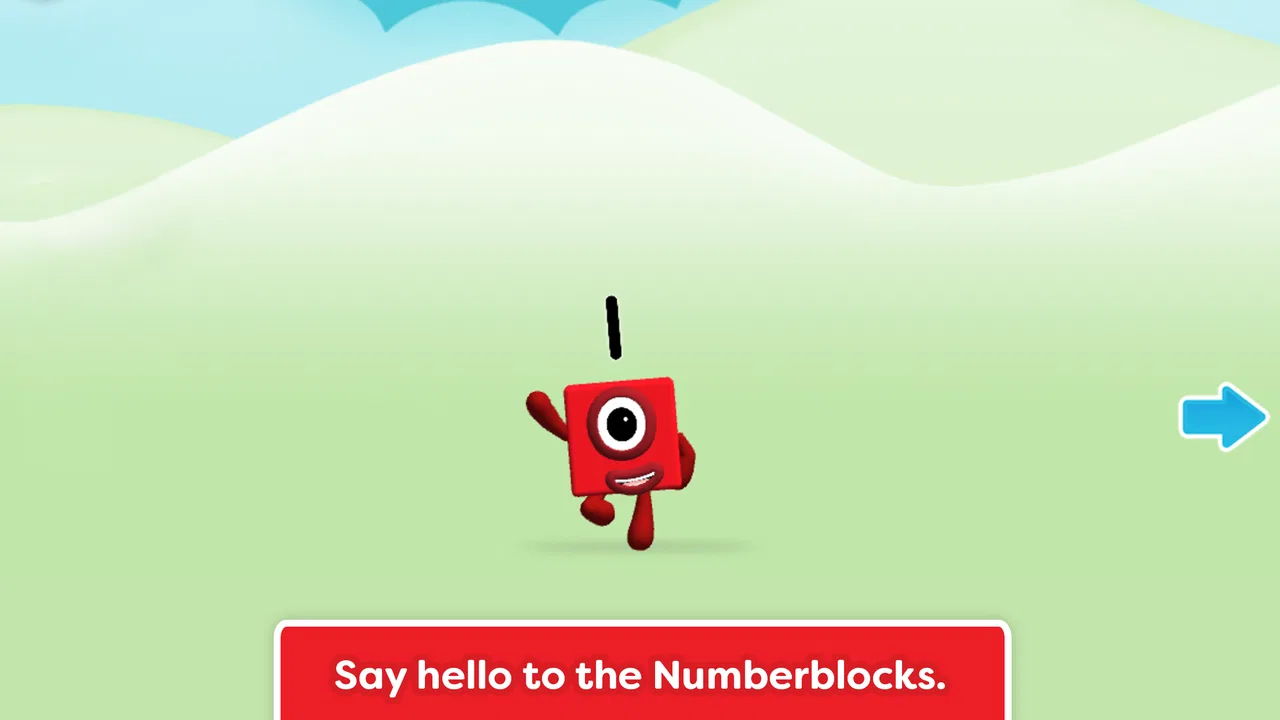
The central concept is easy to understand. Children meet the Numberblocks and count the Numberblobs, so the learning task is connected to colourful characters rather than presented as a page of isolated symbols. That matters for younger players, because the visual context gives them something concrete to follow when number names and written numerals are still developing.
You May Also Like

 Blood Strike: 2.5 Anniversary
Blood Strike’s Loadouts Turn Every Drop Into a Tactical Gamble
A close look at Blood Strike’s custom loadouts: how fast access to signature weapons reshapes its battle royale rhythm, rewards preparation, and narrows the gap between fights.

 Pandora - Music & Podcasts
Pandora’s Music Is Easy to Start, but Harder to Recover
Pandora’s strength is its low-effort path from a seed to a station. Its weak spot is how much confidence it asks you to place in connection, setup, and quiet recovery.

 8 Ball Pool
 Is Built on Rivalries, Rematches, and Routine
A close look at the rivalries, rematches, shared routines, and unanswered safety questions that turn a quick pool match into a persistent mobile community.

 Samsung Music
’s Quiet Strength Is Playing What You Already Own
Its reach comes less from spectacle than from dependable access to a personal library. That simplicity is both the app’s strongest retention engine and its ceiling.

 AccuWeather: Weather Radar
AccuWeather Review: A Quick, Clear Forecast for Everyday Decisions
For everyday plans, the best forecast is the one you can understand quickly. AccuWeather makes rain timing, radar, and local conditions easy to act on, with a few trade-offs.

 Hill Climb Racing
Why Hill Climb Racing Still Turns Crashes Into One More Run
A tiny car, a bumpy hill and one more upgrade: Hill Climb Racing keeps resurfacing because its simple chaos makes every near-miss feel personal.
More From Our News Desk



In my experience, the strongest part of this design is the low barrier to entry. A child does not need to understand a complicated menu or read a long explanation before beginning. The subject is immediately recognisable, and the Numberblocks theme gives the activity a sense of continuity with the television world many families already know.
That familiarity can make a real difference in an everyday situation. Imagine a child becoming restless while a parent prepares dinner. Handing over a short counting activity can create a useful pause without turning the moment into formal homework. I would still stay nearby, but the game gives the child something purposeful to do while the adult finishes a task.
The game is also well suited to shared play. Rather than leaving a child alone with it, a parent can ask, “How many did you see?” or encourage the child to count again more slowly. Those small questions turn screen time into a conversation about quantity, order and mistakes. The app supplies the visual prompt, while the adult supplies the explanation that a game cannot always provide on its own.
One practical tip is to avoid correcting every error immediately. If a child loses track while counting, I would ask them to point to each Numberblob one at a time and try again. This makes the activity about building a reliable method, not simply reaching the right answer. It is a more useful habit than guessing quickly because the characters are familiar.
The game’s educational category is therefore accurate, but its role needs to be understood clearly. It is a focused counting companion, not a replacement for manipulatives, picture books or an adult showing how numbers work in daily life. Children learn more deeply when they can count socks, pieces of fruit or steps as well as digital objects.
Who will get the most from it
I think it is particularly suitable for preschool and early-primary children who are beginning to recognise numbers or who need extra confidence with one-to-one counting. It may also help children who resist conventional practice because the Numberblocks setting feels like play rather than instruction.
Children who already count confidently may find the experience less challenging. If a young player is ready for addition, subtraction, measuring or problem-solving, this game may feel limited as a main learning tool. In that case, I would use it as a warm-up before moving to an activity that asks for more reasoning.
It is less suitable for families seeking a highly structured lesson plan. The store summary presents a simple counting premise, and that simplicity should be treated as a feature rather than a promise of broad academic coverage. Parents who want detailed progress reports, curriculum mapping or extensive skill levels should compare it with a more comprehensive learning platform.
Progress without turning play into pressure
One of the most important questions for any children’s game is whether progress feels encouraging or stressful. Counting practice can become frustrating when a child is pushed to be fast, when mistakes are treated as failure or when advancement is locked behind repeated performance. I found the Numberblocks approach more naturally suited to gentle repetition than competition.
That does not mean every child will respond in the same way. Some children enjoy repeating a familiar task until they feel completely secure. Others lose interest once they have understood the pattern. I would watch the child’s reaction rather than insisting on a fixed session length. A short successful session is more valuable than keeping the game open after attention has disappeared.
A useful household routine is to let the child choose when to stop after completing a small amount of practice. This preserves a sense of control and avoids making the app feel like a compulsory lesson. If the child makes mistakes, I would pause and count aloud together instead of immediately taking over the interaction.
Parents should also remember that digital progress is not the same as real-world understanding. A child may recognise a familiar sequence on screen but still struggle to count a mixed group of objects on the floor. To check whether the skill is transferring, I would follow a session with a simple offline question: count three toys, find five spoons or tell me which group has more.
This is one of the less obvious strengths of the app: it can act as a prompt for better teaching at home, even when the child is not playing. The Numberblobs provide a starting point, and the parent can extend the idea into ordinary objects. That makes the experience more valuable than passive watching, but only if an adult occasionally connects the screen activity to life outside it.
There is also a trade-off in keeping the concept accessible. A very young child can understand counting Numberblobs quickly, but an older or more advanced learner may need more variety. I would not use the game to fill a long journey or an entire afternoon. Its best rhythm is brief practice, a little discussion and then a change of activity.
Fairness, spending and the family budget
The game is free, which removes the most obvious financial barrier for families who want to try it. That is helpful when a parent is unsure whether a child will engage with a counting app at all. It also makes it easier to introduce the game as an occasional learning activity rather than committing money before seeing whether the style suits the child.
From a fairness perspective, the important point is not to assume that free automatically means unlimited or completely frictionless. Families should still look at the current app experience on their own device and supervise a child’s use, particularly when the device is shared with other apps or accounts. I would not promise that every part of the experience remains identical across devices or future updates.
Because the game is centred on counting rather than on a competitive ranking system, I do not see a reason to frame it as a contest between children. The fairest way to use it is to compare a child with their own previous understanding: can they count more carefully, recognise a quantity more confidently or explain how they reached an answer?
That approach also avoids a common problem with educational games. When rewards become the main goal, children may tap quickly without thinking about the maths. I would praise careful counting and self-correction instead of speed. If the child wants to repeat an activity, let the repetition serve practice rather than chasing an arbitrary score.
For families managing several children, the game may work best when each child gets a turn with an adult nearby. Younger players may need help with counting, while older siblings may be tempted to answer for them. Taking turns fairly keeps the learning opportunity with the child who is actually practising.
What I would check before making it a regular choice
The game has a strong basic identity, but parents should set expectations around what that identity does and does not cover. It is not the right choice if you want a full maths course in one download. It is also not ideal for a child who needs advanced challenges, detailed assessment or a broad range of subjects.
I would also consider the child’s relationship with the Numberblocks brand. Familiar characters can make learning inviting, but a child who has never encountered them may not receive the same extra motivation. The counting idea remains understandable, yet the strongest emotional connection is likely to come from children who already enjoy the characters.
Device suitability matters as well. The listed minimum operating-system requirement is Android 8.0, so I would check the device before planning to install it. The current version is 01.07.00, and keeping an app updated can be sensible for compatibility, although I would still test it myself before giving a child unsupervised access.
The game was released on May 23, 2019, but its continued presence suggests that it has remained relevant to families looking for this particular kind of counting activity. Its reach is substantial, with over five million installs, and the average rating is 3.8 from around ten thousand ratings. Those figures indicate broad interest, but they should not replace a child’s actual response: an app can be popular and still be a poor fit for one learner.
I would also avoid treating the rating as an educational verdict. Ratings often reflect usability, expectations and device experiences as well as learning value. For me, the more useful test is whether the child can explain what they counted and apply the idea away from the screen.
How it compares with ordinary alternatives
Compared with a counting video, the game has an important advantage: the child is invited to participate rather than simply watch. That active element can reveal whether they are following the quantity. A video may be better for a quiet introduction or for enjoying the characters, while this game is more useful when the child is ready to respond.
Compared with physical counters, blocks or household objects, the app is more convenient and visually consistent. It is easy to start, and the Numberblocks theme can make the activity feel special. Physical objects are still better for developing a sense of space, handling groups and understanding that numbers apply to real things rather than only animated figures.
Compared with a broad educational platform, this game is simpler and probably easier for a young child to navigate. The trade-off is depth. A larger platform may offer literacy, shapes, puzzles and more formal progression, but it may also feel busier or less focused. I would choose this app when counting is the immediate goal, not when I want one solution for every early-learning need.
Compared with paper worksheets, the game is more inviting for children who dislike sitting down with a pencil. Worksheets can be better for practising written numerals and giving an adult a visible record of work. The app is better at making the first step feel approachable, especially when attention is limited.
One concrete workflow I recommend is to use the game as the middle part of a three-step routine: begin by counting real objects, play briefly, then return to real objects and ask the child to show the same number. This exposes whether the digital activity has supported understanding or merely memorisation. It also prevents the screen from becoming the only place where counting happens.
My trust verdict for families
After considering its purpose, price and limitations, I would recommend Meet the Numberblocks to families who want a free, focused counting game for a young child. Blue Zoo keeps the idea easy to grasp, and the Numberblocks setting gives the activity a friendly identity that can reduce resistance to practice.
I would recommend it most strongly as a short shared activity, not as an electronic babysitter or a complete learning programme. Sit with the child when possible, ask them to count aloud, and connect the Numberblobs with toys or objects around the home. Those simple habits turn a narrow game into a more meaningful learning moment.
The Everyone age rating makes it approachable for family use, and the free price makes trying it low-risk. Still, parents should decide based on the child’s needs rather than the install count or average rating. If the child needs more advanced maths, a broader curriculum or detailed progress tracking, another educational option will be a better main choice.
My final view is that this is a specialised tool with a sensible place in an early-learning routine. Its real value is not in replacing teaching, but in making counting easy to start and easy to repeat. Used that way, it can give a hesitant learner confidence without adding unnecessary pressure. Used as the only maths experience, it will eventually feel too narrow.
FAQs for Meet the Numberblocks
01What is Meet the Numberblocks?
Meet the Numberblocks is an educational children’s app based on the popular Numberblocks animated series. It introduces early maths concepts through interactive activities, character-based learning, songs, puzzles, and playful challenges. Children can explore numbers, counting, simple addition, patterns, and number recognition in a colorful environment designed to make learning feel like play rather than a formal lesson.
02What age group is Meet the Numberblocks suitable for?
The app is mainly aimed at preschool and early-primary children, particularly those beginning to recognize numbers and develop basic counting skills. Younger children may need help navigating some activities, while older children can use it for revision and confidence building. Parents should still check the current store listing for the developer’s recommended age range and regional availability.
03Does Meet the Numberblocks require an internet connection?
Some parts of Meet the Numberblocks may require an internet connection, especially during the initial download, updates, account-related functions, or when accessing content that is not stored on the device. After installation, certain activities may work offline, but this can depend on the version and platform. It is best to open the app once online before using it during travel.
04Does Meet the Numberblocks contain advertisements or in-app purchases?
The app is designed for children, so parents should review its current store description and purchase settings before downloading. Depending on the version, access may involve a one-time purchase, subscription, or optional paid content. Use parental controls and device purchase restrictions to prevent accidental transactions, and always confirm the pricing, renewal terms, and privacy information shown in your region.
05Is Meet the Numberblocks safe and useful for children?
Meet the Numberblocks provides a friendly, age-appropriate way to practise early numeracy, particularly for children who enjoy learning through characters and visual interaction. It can support counting, number recognition, and basic problem-solving, but it should complement—not replace—play, conversation, books, and guidance from adults. Parents should supervise younger users and check permissions, privacy details, and screen-time settings.
Pros
- Fun way to practice counting and number recognition
- Colorful animations keep younger children engaged
- Characters make basic math concepts easier to remember
- Simple interface is suitable for preschool users
- Works well for short
- independent learning sessions
Cons
- Content may feel too easy for children who already know numbers
- Some activities can become repetitive after frequent use
- Younger users may need help navigating certain sections
- Educational value depends on regular
- guided practice
- Device storage and compatibility may vary by platform

Meet the Numberblocks
Gallery